Choose an exchange
Find an upcoming session that matches your interests.
Welcome to Green Bridges
A space for young people across Europe and Sub-Saharan Africa to learn together, challenge assumptions and shape practical solutions for a more sustainable future.

Join the conversation
Explore the themes at the heart of Green Bridges. Upcoming session dates and registration details are published through Action Network Worldwide (ANW).
Coming soon
Upcoming exchange dates and registration details will be announced soon through Action Network Worldwide.
A place for you
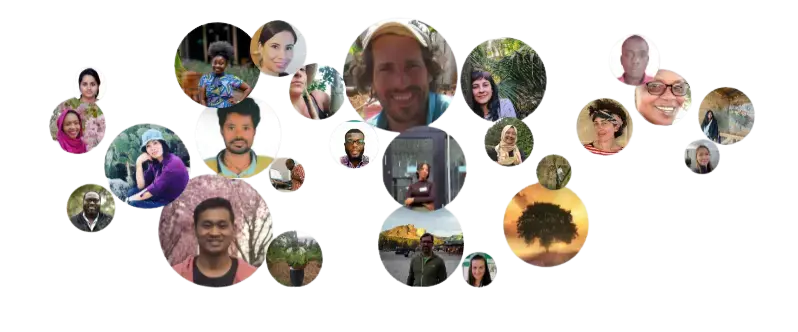
Young people and facilitators from across the consortium bring different experiences, ideas and local realities into the same conversation. There is room for your perspective too.
Your route in
Your journey is simple: discover an opportunity, meet people across borders and keep learning through Action Network Worldwide (ANW).
Find an upcoming session that matches your interests.
Sign up through Action Network Worldwide and get ready to take part.
Discuss, learn from peers and work together on a real question.
Keep learning and connect with the community on ANW.
A shared idea
Green Bridges is built around a simple idea: young people should have opportunities to learn from each other and shape solutions together, regardless of where they live.
By combining virtual exchange, intercultural dialogue, climate education and practical problem-solving, the project creates a space where young people from Europe and Sub-Saharan Africa can share experiences, challenge assumptions and work together on ideas for a more sustainable future.
From exchange to action
The project is co-funded by the European Union through Erasmus+, under the Virtual Exchanges action. Its project reference is 101253584 – GREEN BRIDGES.
Green Bridges focuses on topics such as climate justice, circular economy, green entrepreneurship, regenerative food systems and social innovation. Through online events and mixed-country group work, participants explore real-world challenges and develop practical ideas and solutions that can be taken further in their local communities.
Inclusion by design
A key element of the project is its emphasis on inclusive participation. The project aims for at least 50% of participants to be women and 20% to come from marginalised groups, helping create meaningful opportunities for young people whose voices are often underrepresented in international discussions on climate and sustainability.